Want to try it yourself?

POAS 2

Create more profitable campaigns with Productxl

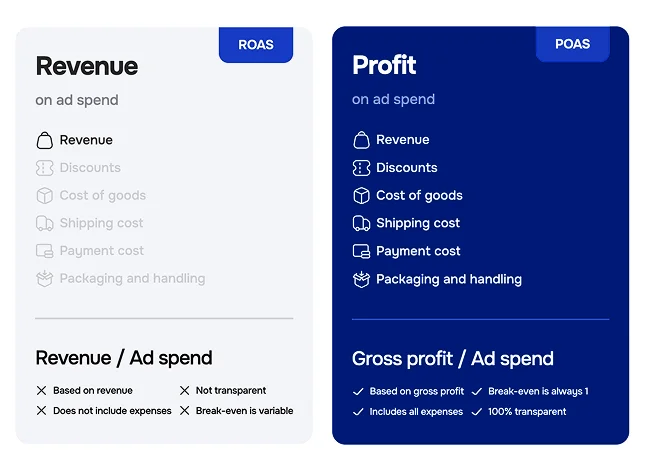
Profit on Ad Spend (POAS®) shows you the actual profitability of each of your ads. When you implement POAS® bidding, you’re directing the algorithm to increase ad spend on the campaigns, ads, and products that drive profitable orders, and decrease ad spend on unprofitable orders.

productxl

=

gross profit

Divided by

AD
spent

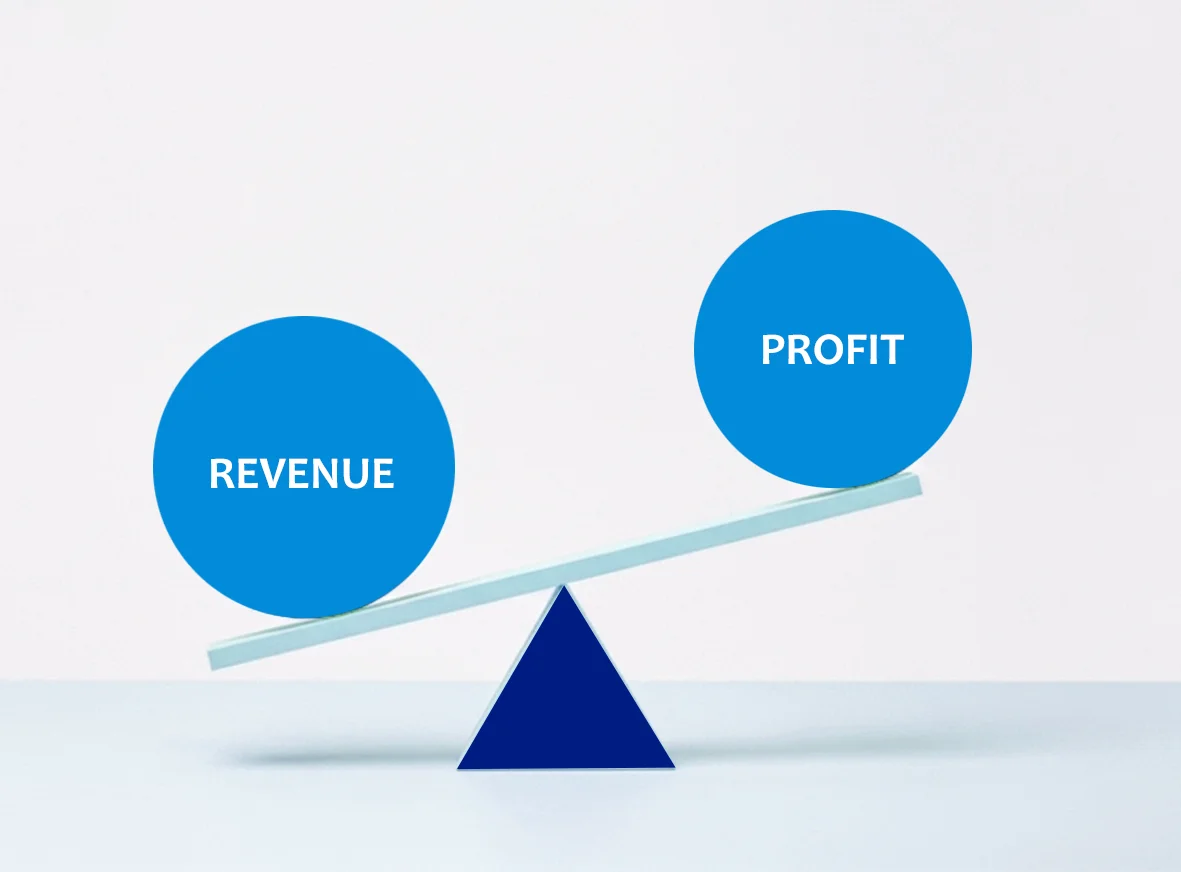
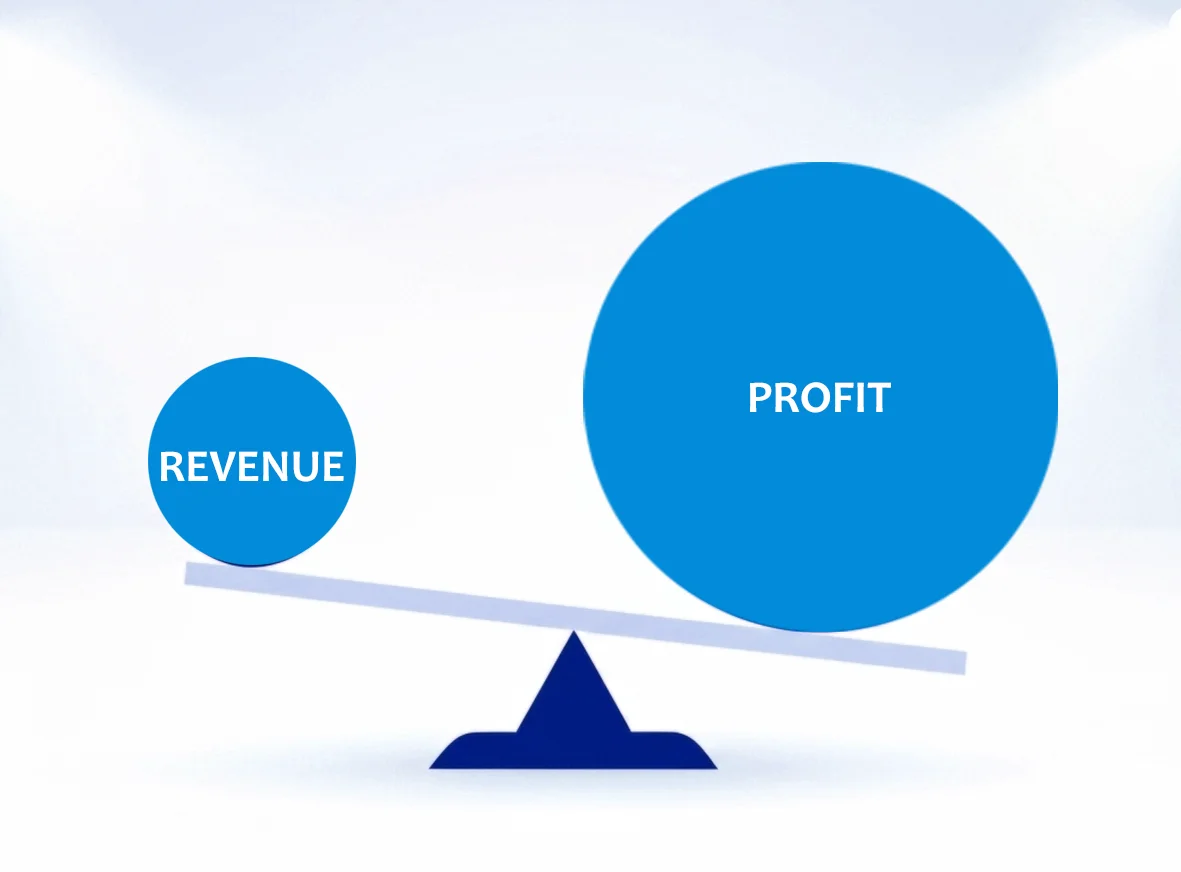
Revenue doesn’t show the whole picture

What about shipping costs or varying product margins? A high-revenue product might still be losing you money.

POAS® factors in the actual cost of doing business, showing you the profit generated from each campaign, search term, product, and ad. This allows you to adjust and scale your marketing spend according to your goals.

ROAS bidding pitfalls

ROAS bidding is a popular optimization strategy you can use on Meta or Google. However, it comes with a number of disadvantages.

ROAS bidding optimizes for revenue, not profit

You need to set conservatively high targets to account for varying product margins and costs (payment fees, shipping, discounts)

ROAS bids are optimized for the product in the ad – if someone buys a different product after clicking, or a bundle, that bid will no longer be optimal

POAS® bidding

With a POAS® target, you set the minimum profit you want to achieve, and direct the algorithms to promote products based on the expected profitability.

POAS® bidding considers all costs and teaches the bidding algorithm to allocate ad spend where it will be most profitable

POAS® bidding doesn’t require an inflated target; your break-even point will always be 1, and everything above that is profitable

POAS® considers the total order margin, not the margin of the product in the ad. Even if the customer buys something else after clicking, the POAS® of that click remains true

productxl
buckets

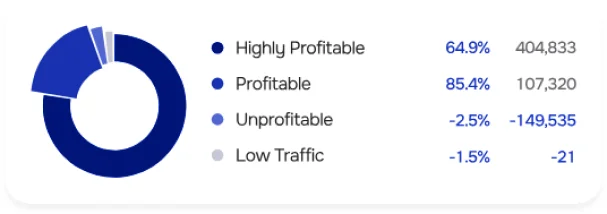
50% of your ad spend goes to unprofitable products. Performance Max (PMax) meets targets through averaging the performance of all products in a campaign (e.g. both low and high ROAS products will be promoted, as long as the end result hits the goal).


It’s more effective to split your products into separate, performance-based buckets: by grouping profitable products into one campaign and unprofitable products into another, you ensure that Google bids high and low on the right ones.


Using productxl
Campaign / Ad Group Level

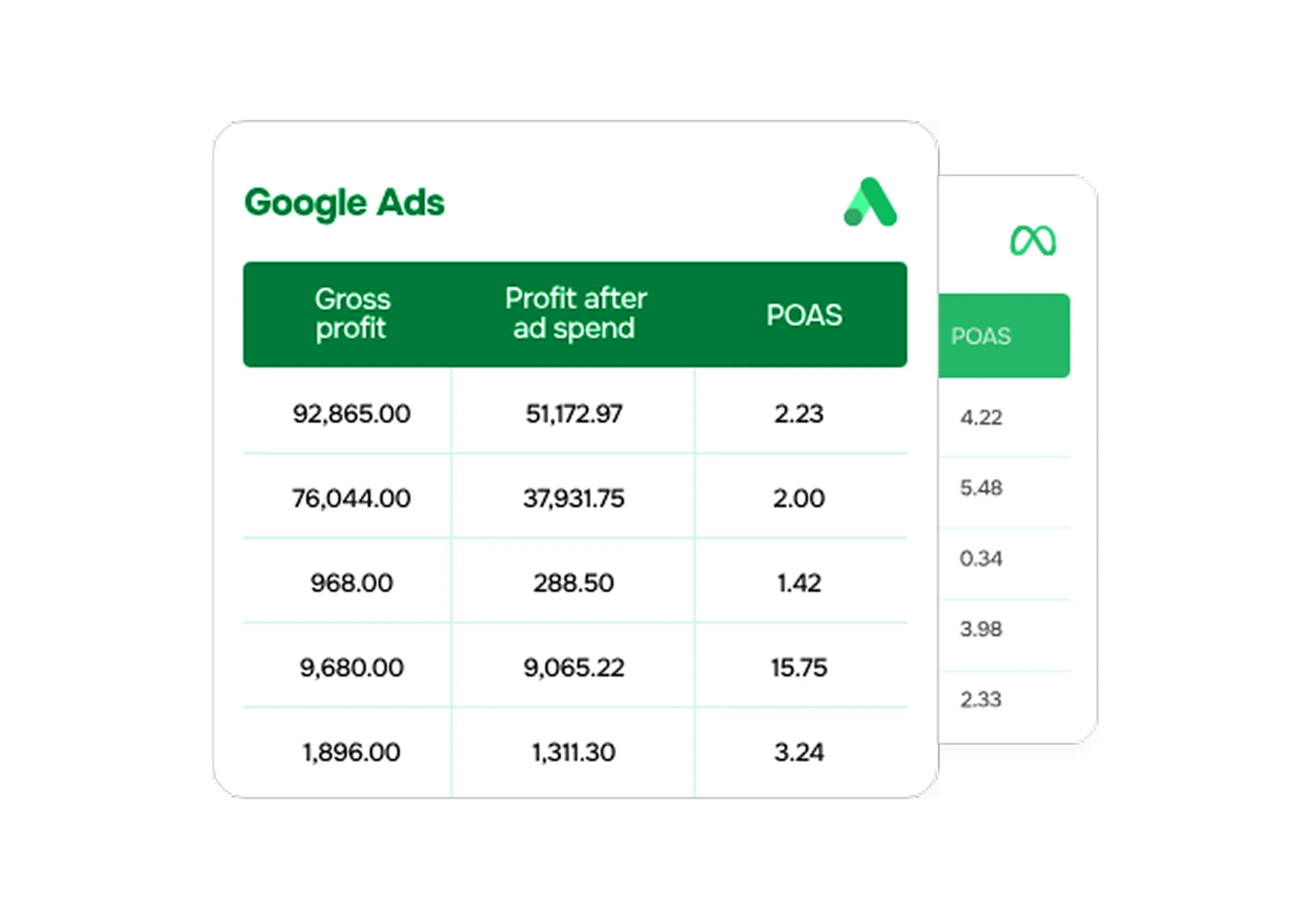
The average POAS® for all of your campaigns is calculated and displayed in real-time in a Custom Column for Google Ads and Meta.

You can drill down to see the profitability of the campaign, the ad group, and even each individual product.

See where you’re most profitable, and direct more of your ad spend there.